Executives Highlight How Ethanol Can Aid Decarbonization
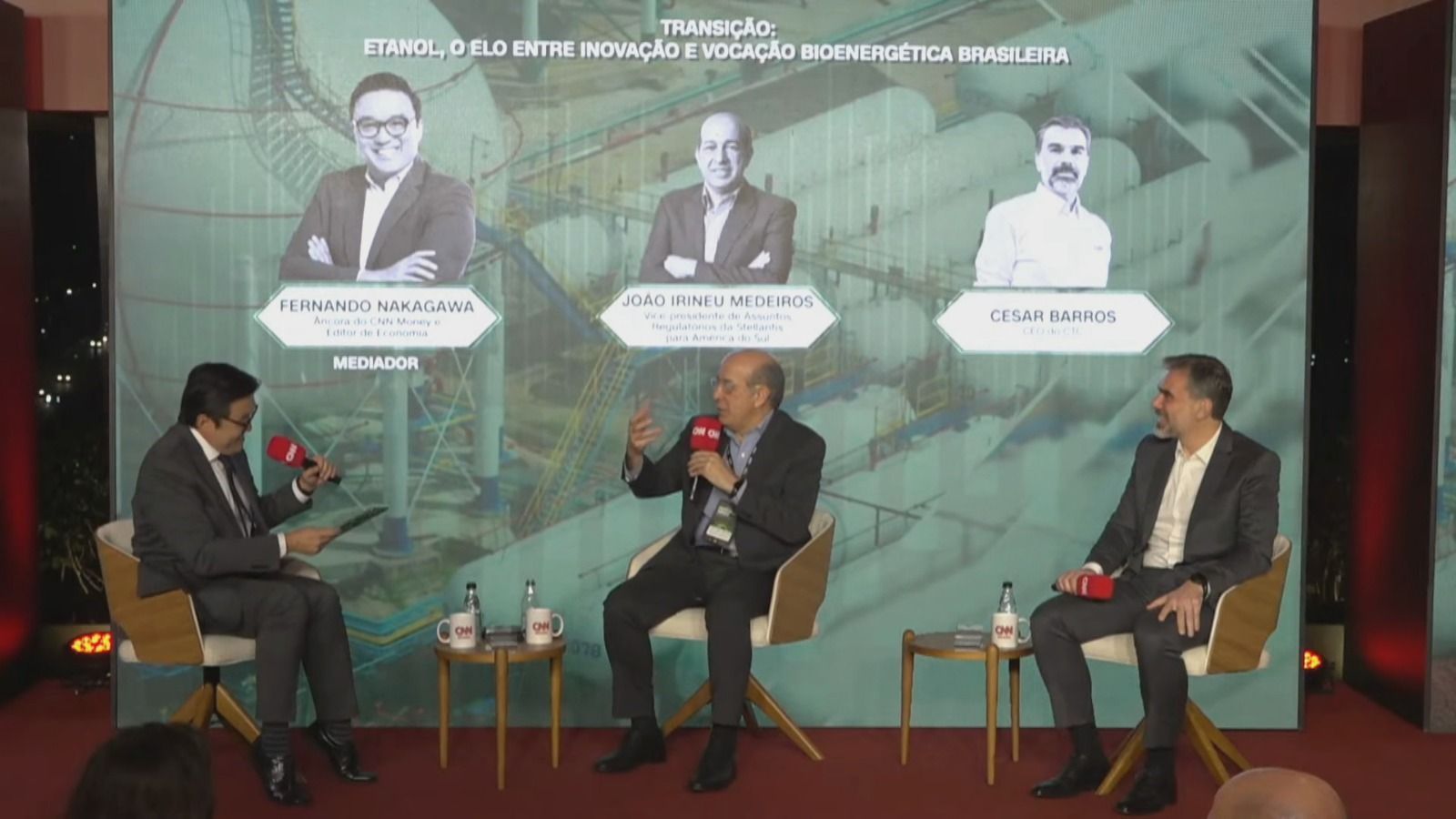
Private sector executives, including João Irineu Medeiros from Stellantis and Cesar Barros from the Sugarcane Technology Center, emphasized in São Paulo during the CNN Talks the importance of ethanol and sugarcane in the energy transition and decarbonization process, highlighting their sustainability and CO2 absorption capacity.
CNN Brasil
September 11, 2025
Importance of Ethanol in Energy Transition
Private sector executives emphasized this Monday (8), in São Paulo, the importance of ethanol in the energy transition and how it can aid decarbonization during the CNN Talks - Green Power event.
Decarbonization Challenge and Ethanol Solution
João Irineu Medeiros, Vice President of Regulatory Affairs for Stellantis in South America, stated that the main global challenge in energy transition is decarbonization. He argued that a direct 'leap' to electric vehicles is not necessary, and ethanol plays a fundamental role in reducing CO2 emissions, explaining that 'The CO2 that comes out of the car's exhaust is captured by sugarcane, which feeds the next harvest'.
Sustainability and Productivity of Sugarcane
Cesar Barros, CEO and President of the Sugarcane Technology Center, recalled the oil crisis and highlighted that 'Sugarcane is extremely sustainable; socially and ecologically'. He observed that 'It is possible to double the productivity of Brazilian sugarcane fields by the next decade with research and development', exemplifying with the advancement of the plant's synthetic seed.
Event Context and Launch of the Bioceanic Route
The CNN Talks - Green Power gathered specialists to discuss regenerative agriculture, bioenergy, and climate before COP30, the UN Climate Summit, in Belém. The event also marked the premiere of the series 'Bioceanic Route', presented by Caio Junqueira, which portrays an alternative to the Port of Santos that will integrate four South American countries and is expected to reduce the transport of goods from Brazil to Asia by 17 days and freight costs by 30%.
{"title":"Executives Highlight How Ethanol Can Aid Decarbonization","desc":"Private sector executives, including João Irineu Medeiros from Stellantis and Cesar Barros from the Sugarcane Technology Center, emphasized in São Paulo during the CNN Talks the importance of ethanol and sugarcane in the energy transition and decarbonization process, highlighting their sustainability and CO2 absorption capacity.","author":"CNN Brasil","tags":"Economy","sourceUrl":"https://www.cnnbrasil.com.br/economia/executivos-destacam-como-etanol-pode-ajudar-na-descarbonizacao/","topImage":"https://v17-def.ap4r.com/kos/s101/nlav11312/ug-ai-seo-imgs/WhatsApp-Image-2025-09-08-at-23.47.21-1.jpeg","paragraphList":[{"paraTitle":"Importance of Ethanol in Energy Transition","paraContent":"Private sector executives emphasized this Monday (8), in São Paulo, the importance of ethanol in the energy transition and how it can aid decarbonization during the CNN Talks - Green Power event."},{"paraTitle":"Decarbonization Challenge and Ethanol Solution","paraContent":"João Irineu Medeiros, Vice President of Regulatory Affairs for Stellantis in South America, stated that the main global challenge in energy transition is decarbonization. He argued that a direct 'leap' to electric vehicles is not necessary, and ethanol plays a fundamental role in reducing CO2 emissions, explaining that 'The CO2 that comes out of the car's exhaust is captured by sugarcane, which feeds the next harvest'."},{"paraTitle":"Sustainability and Productivity of Sugarcane","paraContent":"Cesar Barros, CEO and President of the Sugarcane Technology Center, recalled the oil crisis and highlighted that 'Sugarcane is extremely sustainable; socially and ecologically'. He observed that 'It is possible to double the productivity of Brazilian sugarcane fields by the next decade with research and development', exemplifying with the advancement of the plant's synthetic seed."},{"paraTitle":"Event Context and Launch of the Bioceanic Route","paraContent":"The CNN Talks - Green Power gathered specialists to discuss regenerative agriculture, bioenergy, and climate before COP30, the UN Climate Summit, in Belém. The event also marked the premiere of the series 'Bioceanic Route', presented by Caio Junqueira, which portrays an alternative to the Port of Santos that will integrate four South American countries and is expected to reduce the transport of goods from Brazil to Asia by 17 days and freight costs by 30%."}],"metaInfo":{"keywords":"ethanol, decarbonization, sugarcane, renewable energy","sitename":"CNN Brazil","description":"Executives highlight the fundamental role of ethanol and sugarcane in the energy transition and decarbonization, emphasizing sustainability and CO2 absorption.","language":"en"},"pubDate":"2025-09-11"}